This is Photobomb. He is a Cocos Keeling Joculator Angelfish (Centropyge joculator). He came to live with me when my friend Tony Plasters took his tank down in early January 2021. He lived with Tony for 2.5 years, and Tony got him when he was just a little immature fish (and probably female at the time, but he's now transitioned into a robust male. Check out his magnificent forehead hump).
I was hesitant to put him in my 90 gallon reef, but Tony assured me he would be a model citizen. Two years later, and Photobomb the Joculator Angelfish has proven to be a completely reef safe dwarf angelfish.
I can't say whether he'd eat any particular macroalgae or not because his friend Gemmy the Gem Tang eats macroalgae before it hits the water.
Here are some photos of Photobomb with his best friend Gemmy and their 90 gallon reef tank:
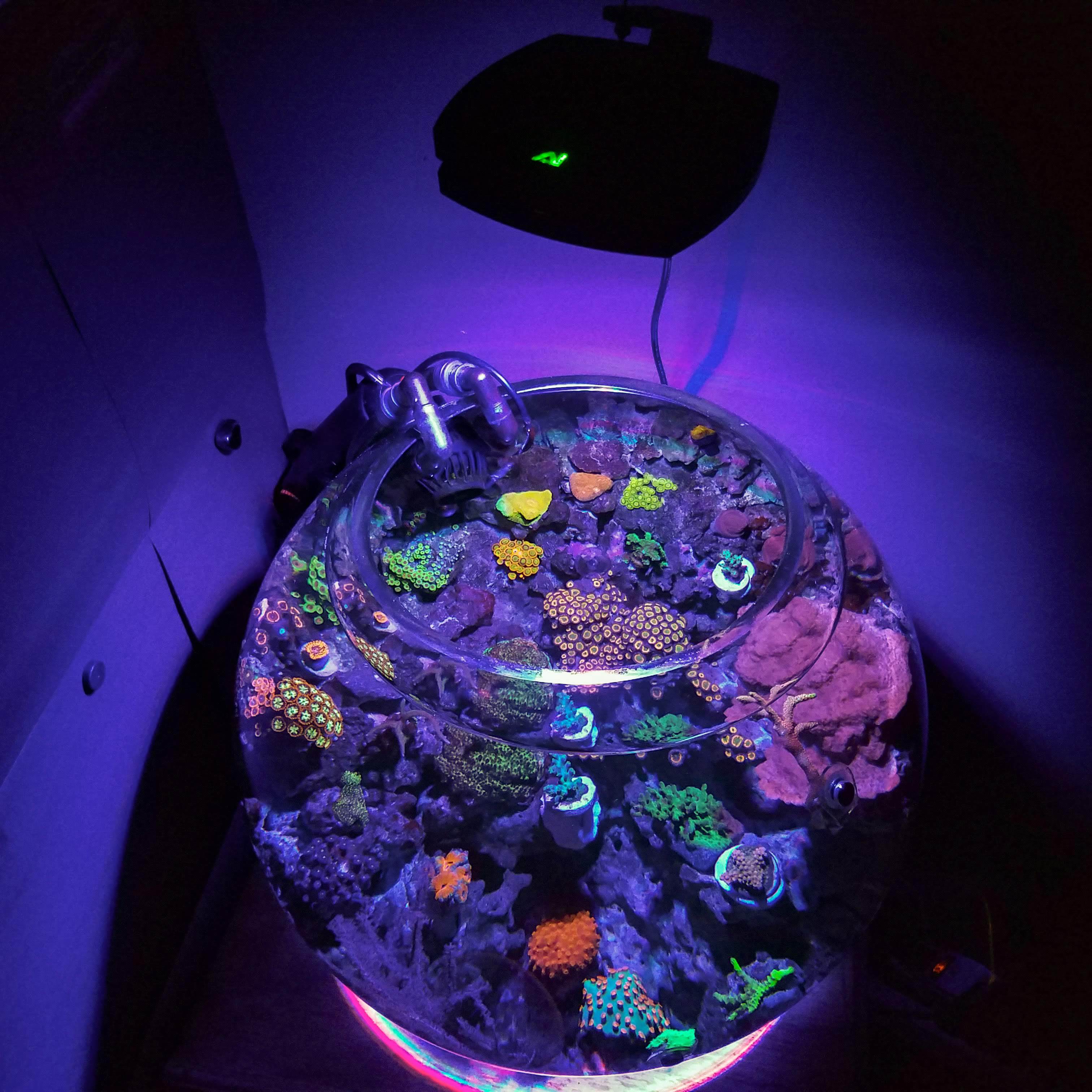
It's been 7 years since I started my first "reef bowl." I think I finally have the hang of it.
I temporarily disassembled this bowl in 2020 but revamped it in 2021 with the help from Unicorn Reef Bowl sponsor Aqua Illumination and from my job at Biota. I decided to do things a bit differently this time. I put many of the original corals back in like the Cyphastrea I got from my sister, the Red Monti cap, and the Sunny D Zoas. I also added a few Toadstool corals from Biota, but the main thing I'm doing differently with Unicorn Reef Bowl 2.0 is...captive bred Biota Gobies!
update pic April 2023
Feb 2023
Livestock:
Since I have 3 other tanks at home, I change things around in the bowl sometimes, but most of these corals have been growing in here since the revamp. The Duncan, Red Monti Cap, Toadstools, Devil's hand, Zoas, Cyphastrea, Jawbreaker mushrooms, and Green stripe mushrooms all started as little frags. Now a little over a year later, and they're filling the bowl nicely. I also added about a dozen little gobies from work, 5 different species. They make the bowl so much more fun.
Biota White Willow Toadstool
Biota Green Toadstool
Duncan Coral
Some coral frags from the original 2016 bowl
This Red Monti cap started in the original bowl in 2016
a frag of Sunny D Zoa that started in the original 2016 bowl
Tricolor Valida
Fancy Fancy - new Aqua Illumination AI Prime 16 HD light
Biota Palau Cosmic Nano Goby
Biota Palau Black Belly Nano Goby
Biota Palau Eviota brahmi Goby
Biota Palau Eviota storthynx
Biota Palau Starry Gobies are the stars of this show
Equipment:
Aqua Illumination Prime 16 HD LED light on a hanging cable kit
Aqua Illumination Nero Wavemaker with fish guard (no issues with microscopic gobies at all)
SunSun canister filter
Hydor ETH in line heater
Inkbird heater controller
I love this new Aqua Illumination light! The colors are beautiful, and the new 16 HD is clearly much brighter than the original AI Prime.
AI Prime comparison
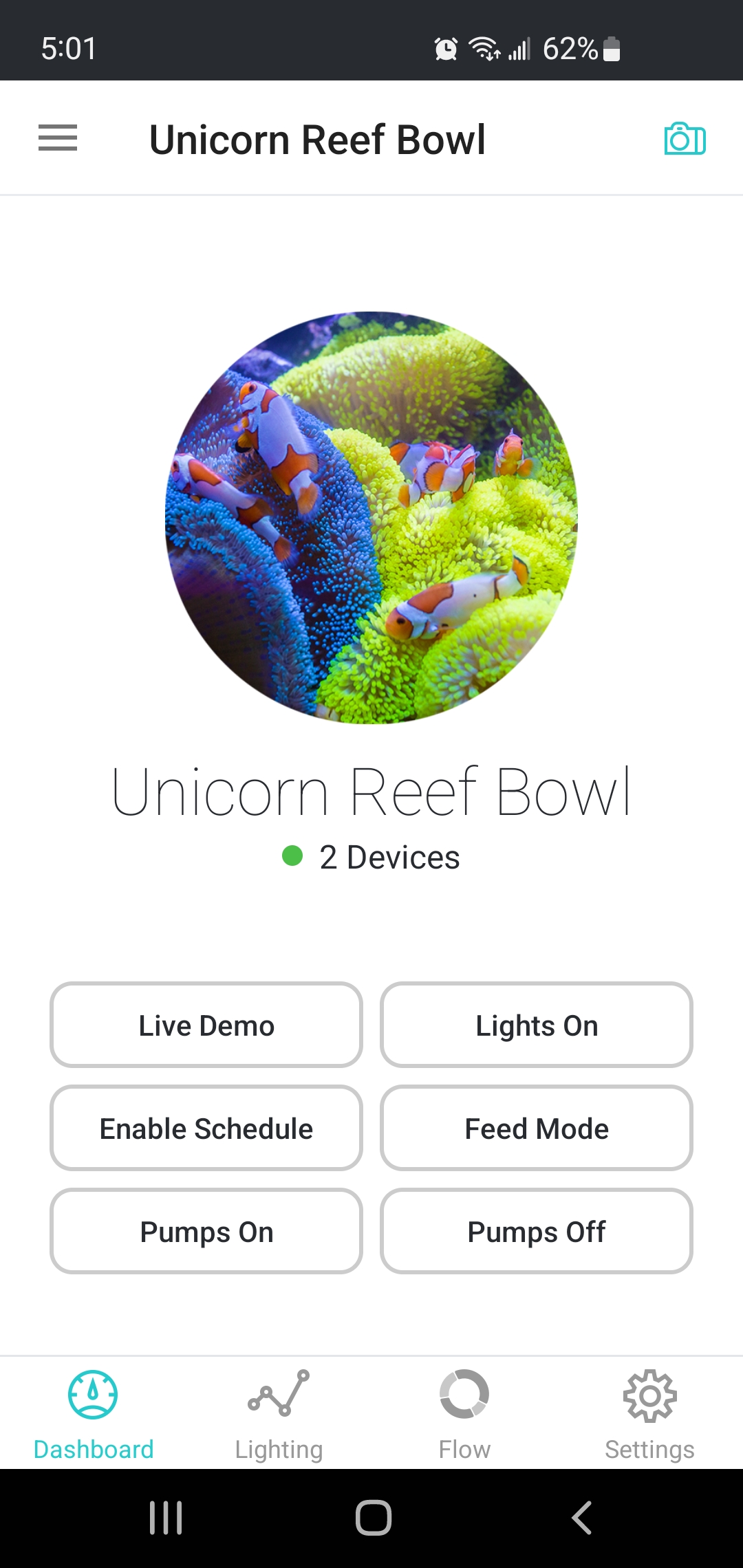
The app is so easy to use, even for me, a 40 year old lady who usually asks my son for help with technology. When I want to take photos of the bowl, it only takes a few seconds to change the color temperature. Then I can set it back to my schedule easily.
The Nero wavemaker is also awesome, and it connects to the same app so I can control the flow and set it to different flow rates at different times of day.
Maintenance:
Weekly (or when I remember) 50% water changes. Sometimes I use freshly made saltwater that I have mixing constantly in a 30 gallon vat, sometimes I take water from my 90 gallon reef. I mostly use Instant Ocean Reef Crystals salt. The gobies (and Duncan coral) feed on Easy Reefs DKI 0.8mm pellets, and the corals seem to be doing great with just goby waste. With fewer stony corals, I don't have to worry as much about alkalinity and calcium as I did when the bowl was mostly SPS. Of course, frequent top-off for evaporation is super important in a small tank like this.
I do have some very minor issues with algae, but I have a clump of Caulerpa from Algae Barn and also some wild red hitchhiker algae that helps keep nutrients in check.
Humble beginning - URB 2.0 revamp October 2021
History of Felicia's Unicorn Reef Bowl
Reef Bowl 2017
It's hard to pinpoint the "beginning" of the Unicorn Reef Bowl, because it evolved from other tanks I had over the years. In 2014, I moved from Connecticut back home to Pennsylvania after our first son was born. I had 3 long distance moves in under 4 years and ended up tearing down more than 30 tanks in the process, all more than 20 gallons. After moving again and having a baby, all I could handle was a small tank. I was keeping a few frags from some of my favorite corals in a 6 gallon cube, but it was a mess. It had an overfed Gobiesox clingfish in it, and the corals really needed a new home.
My mom found a gorgeous 2 gallon pedestal vase while she was antique shopping and bought it for me. In October 2016 I decided to move those neglected corals to the vase and was very pleased with the result. The corals did much better in their own space without a hungry, overfed fish.
one of my son's first words was "urchin"
In June 2017 I wrote an article about the bowl for Reefs.com when the reef bowl was only 8 months along.
Keeping a reef bowl is pretty simple. You need light, flow, nutrients, and proper water conditions. Most bowl keepers use an air pump for flow, but I chose a small powerhead that was hidden under the rocks. I also used a small Betta tank heater and an ABI Tuna Blue 38 PAR bulb that I clipped on to a shelf I hung on the wall above the tank. Each week, I'd feed the corals a big meal of coral foods in the morning, then later that day do a near complete water change with NutraSea natural seawater in a box from Petco. Occasionally I'd have to use fresh saltwater that I'd mixed at least overnight, making sure the water was the same temperature as the bowl. This kept the water clean and replenished calcium, alkalinity, and trace elements. I'd like to say I remembered to do this every week, but honestly I didn't always. The corals were forgiving and thrived.
How did the "Unicorn Reef Bowl" get its name? The stand I kept my bowl on was a very old, small rickety end table that started to crack. I knew I had to get a new stand. My step-dad is a hobby woodworker, so made a new stand for me for my birthday in 2017. The masterpiece he created was far better than I could have ever hoped for. He carved an adorable unicorn and hummingbird for the sides of the stand and even made a latched door for the front. We also ended up drilling holes in the back to hide cords and equipment. (Side note: he also built a stand for my 30 gallon cube that is even more impressive. It even has wheels.)
The stand was quite a bit larger than my old one, so I thought maybe I could put a slightly bigger bowl on this stand. I found a huge 8 gallon glass bowl online that fit perfectly. The new bowl is about 18" across at the widest point, so it's definitely not in the "pico reef" category anymore.
April 2017
By April 2017 the new bowl was set up. I had a bad hair algae outbreak, but with some fluconazole it cleared up, and by summer everything was settling in better.
November 2017
In January 2018, my son Lachlan became the first and only person to ever be featured on the cover of CORAL magazine. I've been a contributor to my favorite aquarium-related magazine since 2011, so of course I wrote an article about Reef Bowl for the magazine. I mentioned how reef bowls can be attractive to women, moms, or young people who might not have the funds, free time, or space to have a larger reef tank. The unique shapes of antique bowls and vases bring some visual interest to the tiny tanks, and they don't require a lot of maintenance.
Sunny D Zoas growth
April 2018
This is when the Montipora setosa started to RTN and die. I got a frag from my friend Ryan years before, and it always had a hole in it. It grew in a ring and then eventually covered over the bare spot in the center. Then it started to die there, and never recovered. I tried fragging it and moving the frags to other people's tanks, but those died, too, sadly. This coral's death still haunts me and made me very sad.
July 2018
I replaced the Setosa with a Red Planet my step-dad got me from our local shop, you can see it here in the center. I added a couple new frags I got from MACNA 2017 and Reefapalooza NY, also. Around this time I added a small Sun Sun canister that I keep in the cabinet under the bowl. The hoses go out a hole drilled in the back of the cabinet and sit on the rim of the tank. I also upgraded to a Hydor ETH in-line heater.
August 2018
Around August 2018 I upgraded my light to an Aqua Illumination Prime. This was a big deal, and made my corals very happy. I did a slow acclimation to the new, brighter light. The color was much better, and the app for controlling the light was so easy to use. This was definitely one of the best things I ever did for the Reef Bowl.
September 2018 just before my son was born
In October 2018, I had my first big die off of coral in this bowl. My 2nd son was born premature, and we spent several weeks in the hospital as a result. My family was driving an hour one way each day to see us in the hospital, so the tanks kind of took a back seat. When I came home, I'd lost several SPS frags including the deepwater Acro and Monti undata I got from Ryan, and the awesome Acros I got from my visit to TSM. It got more and more difficult to maintain the reef bowl after my 2nd son was born.
In early 2020, I started having a lot of major issues with the reef bowl. The light started to overheat and turn itself off because the fan was going. A friend told me to remove the fan screen, and that worked for a while, but eventually the light gave out. I don't want to blame the light, after all, I did get it from the "returns" section at work, so who knows what it went through before I got it.
My 2nd son was now a toddler, and he seemed obsessed with putting random objects in the bowl. I pulled out stuffed animals, play-dough, hot wheels cars, yogurt, all sorts of fun things. When I took the bowl apart in March 2020, many of my favorite corals were dying, and I found some rusted metal under the rocks. Sadly, I decided to take the reef bowl down and moved everything to my 90 gallon tank.
dying Cyphastrea
March 2020. So much empty.
Sad Mummy Eye Chalice. It recovered and is a beast now!
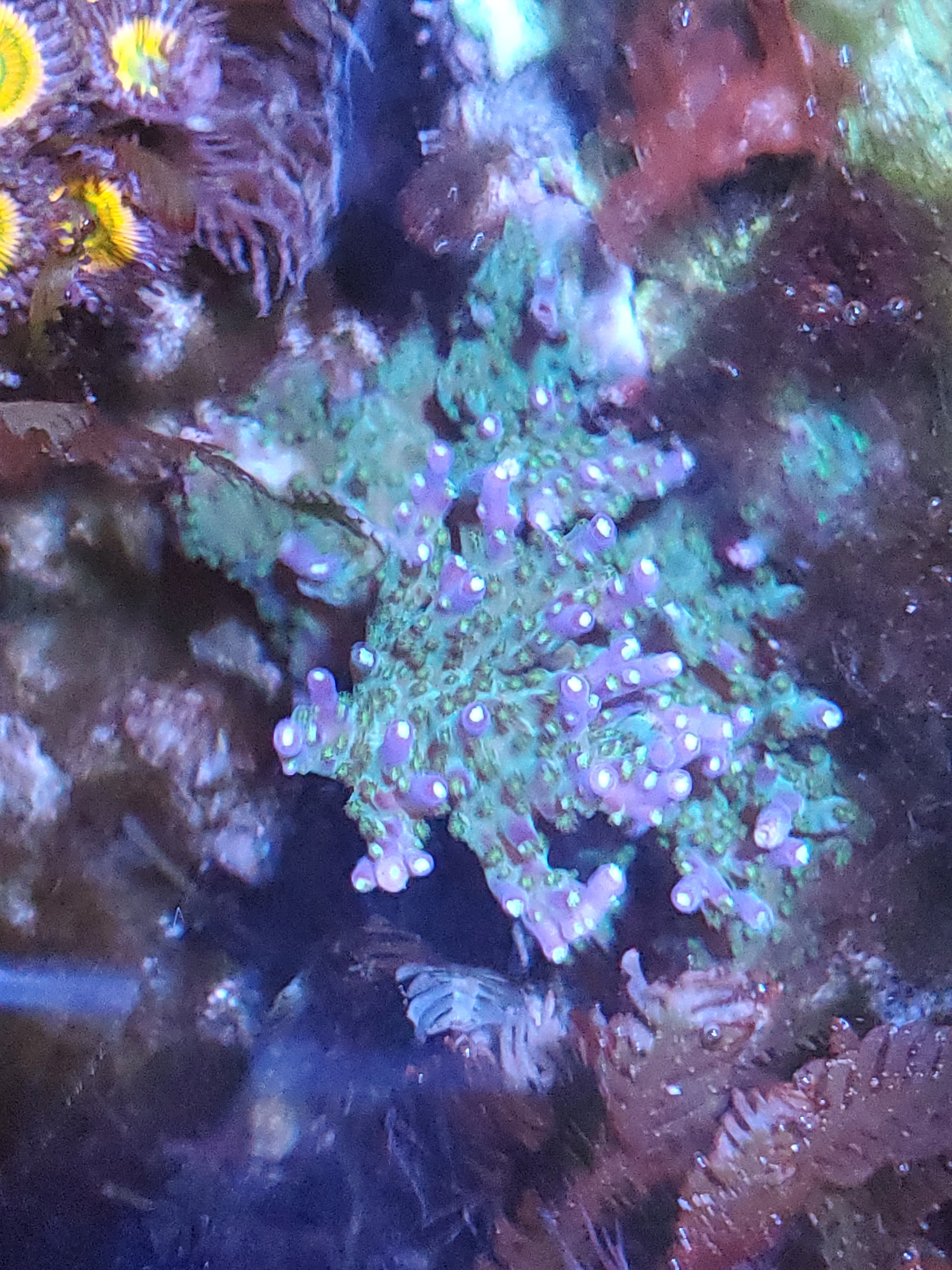
In 2023 I still have most of these corals in my 90 gallon tank. The Red Planet is now 10" across and 5" tall. The Red Montipora capricornis, if I had let it grow, it would be 3 feet across by now. The Mummy Eye chalice is now 8" across, and the Grube's Gorgonian would be 5 feet across if I'd let it grow. I cut colonies off of it every few months. The Sunny D Zoa, orange Zoas, and Rasta Zoas are also impressive. The small Superman Cyphastrea my sister gave me for the bowl is now spread over much of the 90 and the new reef bowl. The tiny nub of Tricolor Valida Acro I picked up from my friend who was fragging it is now a large colony about 10" diameter. The plate coral baby my friend grew from anthocauli that I kept in a shot glass in this bowl is now an 8" monster. The (super slow growing) tiny neon green cabbage I got from my LFS in 2016 is now front and center in the 90.
In September 2021, I felt like I had enough time and energy to rebuild the Unicorn Reef Bowl. I planned to use all my old equipment and coral I had lying around the house, plus coral and fish from work (Biota). I am a part-time work from home/stay at home mom, so I always have to reef on a seriously low budget. I reached out to Aqua Illumination to ask if they have repair services for their old lights, and they instead graciously offered to "sponsor" the reef bowl for me and sent the new light and Nero wavemaker.
September 2021
Much of the equipment I use on my tanks are hand-me-downs from beloved friends, or taken out of the literal trash bin or returns section at work! Some of the "higher end" equipment I use was donated directly from aquarium companies who believe in my projects. I don't consider myself at all to be a social media "influencer," but for 20 years I've been working in the aquarium industry and guiding customers to the aquarium products that will work best for their build and their budget. Without the brands and employers that have sponsored my reefing journeys over the years, I wouldn't be able to do all this.
Thank you for reading, and please feel free to ask any questions.







.JPG)

.JPG)
.JPG)




.jpg)


.jpg)
.jpg)
.jpg)